
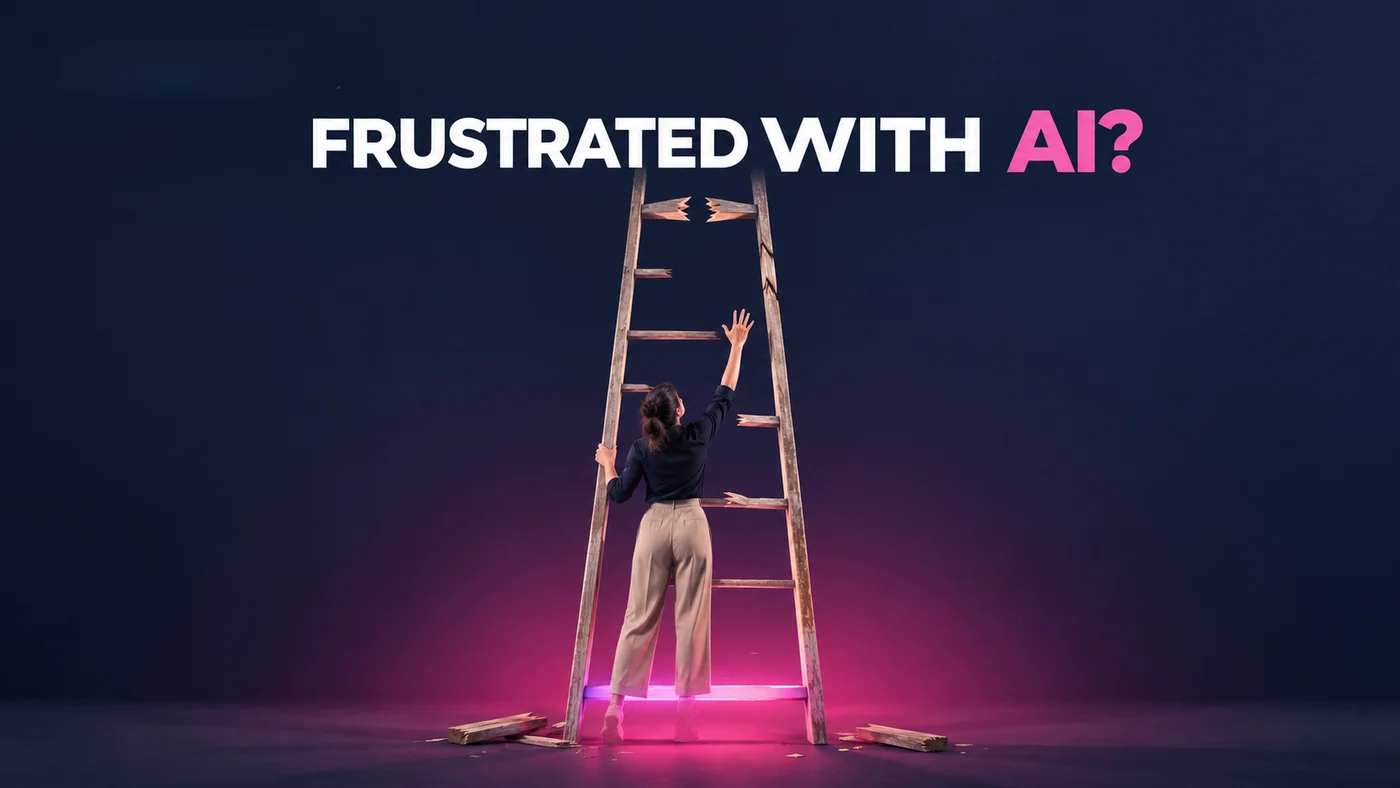
Most businesses have already paid for AI. Licences, subscriptions, an add-on inside software they already use. Very few have invested in the people expected to use it.
So here is what usually happens. Someone tries AI, gets a bland or wrong answer, spends twenty minutes rewording and fixing it, and decides it would have been quicker to do the job themselves. Multiply that across a team and the licences sit there, paid for and barely used.
The tool is rarely the problem. The skill is. AI is only as good as the person asking.
📌 Endless videos are not training
The usual fix is a pile of YouTube videos or an online course. People watch hours of someone else's examples, a chatbot writing a poem or planning a holiday, then go back to their own work and none of it applies. They lose the time, they get frustrated, and most of them give up.
Watching someone else use AI builds about as much skill as watching cooking shows builds a chef.
📌 Six things that make AI education stick
A good prompt is only 25% of the work. The rest is knowing what to hand to AI in the first place, how to brief it properly, how to check what comes back, and how to use it safely with client and business information. Those four skills have names: Delegation, Description, Discernment and Diligence. Together they are what AI fluency means, and they stick fastest when the education is built around your business.
1. Start with a small group
Pick three to five people who are curious. Not the most senior, not the most technical, the most curious. They push through the awkward first week, and they become the proof everyone else watches.
2. Teach on their own work
Every session should use the team's real tasks, real documents and real language. An accountant does not need to see AI write a marketing email. They need to see it draft the client query they write every week. That is the moment the question changes from "what is this for?" to "what else can it do?"
3. One person, one task, one number
Pick one task each person does every week and time it. Then time it again once AI is part of it. That single number does more for adoption than any presentation, because the rest of the team can see it is real.
4. Set the guardrails first
People hold back when they are unsure what is allowed. Decide early what information can go in, which tools are approved, and who reviews the output before it leaves the business. Clear rules give people permission to try.
5. Space the sessions out
One session shows people what is possible. Shorter sessions, a week or two apart, build the habit. Start each one with what people tried since the last: what worked, what did not, what they would change.
6. Turn wins into repeatable processes
A win that lives in one person's head leaves with that person. Once a task works, write it down: the steps, the instructions given to the AI, and the check at the end. Then hand it to the next person to run.
That is the difference between using AI and being good at it.
📌 The return is in your people
Most Australian businesses sit somewhere in the first two of the 5 stages of AI adoption. Another tool will not move them up. A team that knows how to use the tools it already has will.
Before the next AI subscription goes on the card, ask a simpler question: how much has your team actually been taught?
Over the next four weeks, this series takes one skill at a time, starting with Delegation: deciding what to hand to AI in the first place.
If you want a quick read on where your business sits today, the free AI Adoption Level Check takes about five minutes: portfolio.onelevelup.com.au/ai-adoption-check/
Until next time
Loz Demousselle
AI Adoption Consultant at One Level Up, helping 8 to 80 person firms get their whole team using AI, daily and safely.
More at onelevelup.com.au